
Orthodontic treatment is often viewed as a service designed for teenagers. However, starting at age 7, children are encouraged to visit an orthodontist for the first time to determine whether early signs indicate the need for braces. With advancements in orthodontics, professionals can provide a solution that minimizes the potential for more extensive appliances in the future. Discover how you can tell if your child might benefit from pediatric orthodontics.
What Is Pediatric Orthodontics?
Pediatric orthodontics, or Phase 1 Orthodontics, is intended to address early dental problems so that more extensive and complex treatment is less likely to be required in the future.
Since young children often have a combination of baby and adult teeth, the proposed treatment plan will incorporate how to minimize potential overcrowding, misalignment, and bite issues. By using orthodontic appliances to adjust existing teeth, the orthodontist can ensure that any new teeth that erupt have enough room to move into place.
How Can You Know if Your Child Needs Braces?
Although your child’s orthodontist will deliver the news as to whether they need braces, it can be helpful to identify problems early on so that you do not wait to bring your child in for help. If you notice any of the following signs, call the orthodontist’s office to schedule an appointment:
- They are struggling to chew or bite down when eating
- They regularly bite the inside of their cheeks
- Their teeth appear worn down
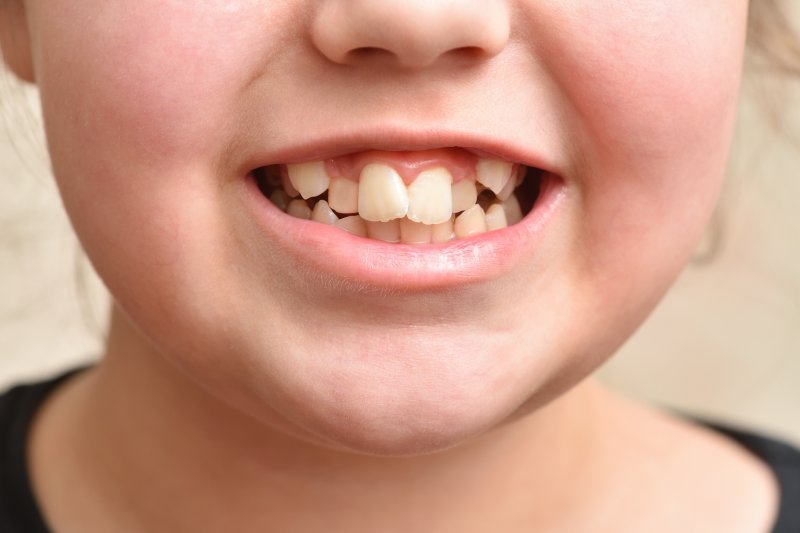
- Their teeth are crowded, missing, or severely misaligned
- Their jaw and teeth are not proportionate to the rest of their face
- They have a severe overbite, underbite, crossbite, or open bite
What Makes Pediatric Orthodontics Beneficial?
Choosing pediatric orthodontics or Phase 1 Orthodontics for your child has its benefits. Although they might need headgear, limited-phase braces, a specialized retainer, or a space maintainer, this type of early treatment can:
- Ensure permanent teeth erupt without issue and into their proper place
- Help your child avoid jaw surgery or other similar procedures
- Minimize developmental issues that can make childhood more difficult (i.e., a speech impediment)
- Ensure your child’s upper and lower arches align properly so that their overall appearance helps them feel confident
Do not be discouraged if you learn that your child needs braces. This early form of orthodontics will help reduce their chances of lengthier treatment in the future, allowing them to enjoy their straighter, healthier smile each day.
About the Author
Dr. Johana Cortés-Mercado is a skilled orthodontist who earned her DMD at the University of Puerto Rico School of Dental Medicine. She then completed her specialty training in orthodontics and a Master of Science in dentistry from Case Western Reserve University. At Super Braces of Lawrence, she works with patients of all ages, including young ones who may require Phase One Orthodontic treatment. If you have a child who is struggling to chew comfortably, visit our website or call (978) 794-0000 to schedule a consultation.